
What this page explains
Recovery support may fit when someone is no longer acutely ill but still feels depleted, slow to recover, low on energy, dehydrated, or not yet back to baseline after illness, travel, stress, or physical strain.[medline-fatigue]
Recovery support
Recovery support focuses on helping people get back to baseline safely.
Recovery support may fit when someone is no longer acutely ill but still feels depleted, slow to recover, low on energy, dehydrated, or not yet back to baseline after illness, travel, stress, or physical strain.1
Recovery care should not replace emergency evaluation for severe or unstable symptoms.1 Trouble breathing, chest pain, confusion, fainting, severe weakness, or rapidly worsening symptoms require urgent or emergency care.2
Recovery is individual
Some people recover quickly. Others need more time, hydration, nutrition, sleep recovery, or clinician-guided support.
Wellness, not urgency
Recovery support is designed for lower-acuity recovery strain, not unstable illness or emergency symptoms.
Clinical review still matters
Fatigue, weakness, dehydration overlap, or delayed recovery should still be evaluated thoughtfully.
Decision framework
Rest, wellness support, or higher-acuity care?
The safest recovery decision separates ordinary recovery strain from symptoms that may need medical escalation or urgent evaluation.1
Home recovery may be enough when
- Symptoms are mild and improving
- Sleep, hydration, food, and rest are helping
- There are no major warning signs
- Energy is gradually returning
- The person feels stable overall
Baseline Wellness Care may be appropriate when
- Fatigue, low energy, dehydration overlap, or recovery strain is lingering
- Travel, illness recovery, burnout, or stress has disrupted normal recovery
- Clinical wellness support, hydration support, or recovery guidance may help
- The person is stable and not acutely ill
- The patient wants clinician-guided recovery support at home
Urgent care or ER evaluation is required when
- Symptoms are rapidly worsening
- Chest pain, confusion, fainting, or trouble breathing occurs
- Weakness becomes severe or unsafe
- The person cannot tolerate fluids
- There are signs of a more serious underlying condition
Recovery context
Recovery strain often overlaps with sleep, hydration, travel, illness, and burnout.
Recovery support is not about maximizing performance. It is about understanding what may be slowing recovery and whether wellness support may help someone feel more stable and restored.2
Post-illness fatigue
Energy levels may remain low after viral illness, poor sleep, dehydration, or prolonged recovery.[medline-fatigue]
Travel recovery
Jet lag, schedule disruption, dehydration, poor sleep, and stress may affect recovery.[medline-dehydration]
Burnout and stress
Stress and physical strain can contribute to low energy, poor sleep, and delayed recovery.
Treatment reality
Recovery support should feel restorative, not overpromised.
Recovery support starts with symptom review, hydration context, sleep disruption, recovery strain, nutrition, stress, travel history, and wellness goals.[medline-fatigue]
Hydration support or wellness therapies may fit selected stable cases when clinically appropriate.[medline-dehydration] Care decisions should remain individualized and clinically guided.
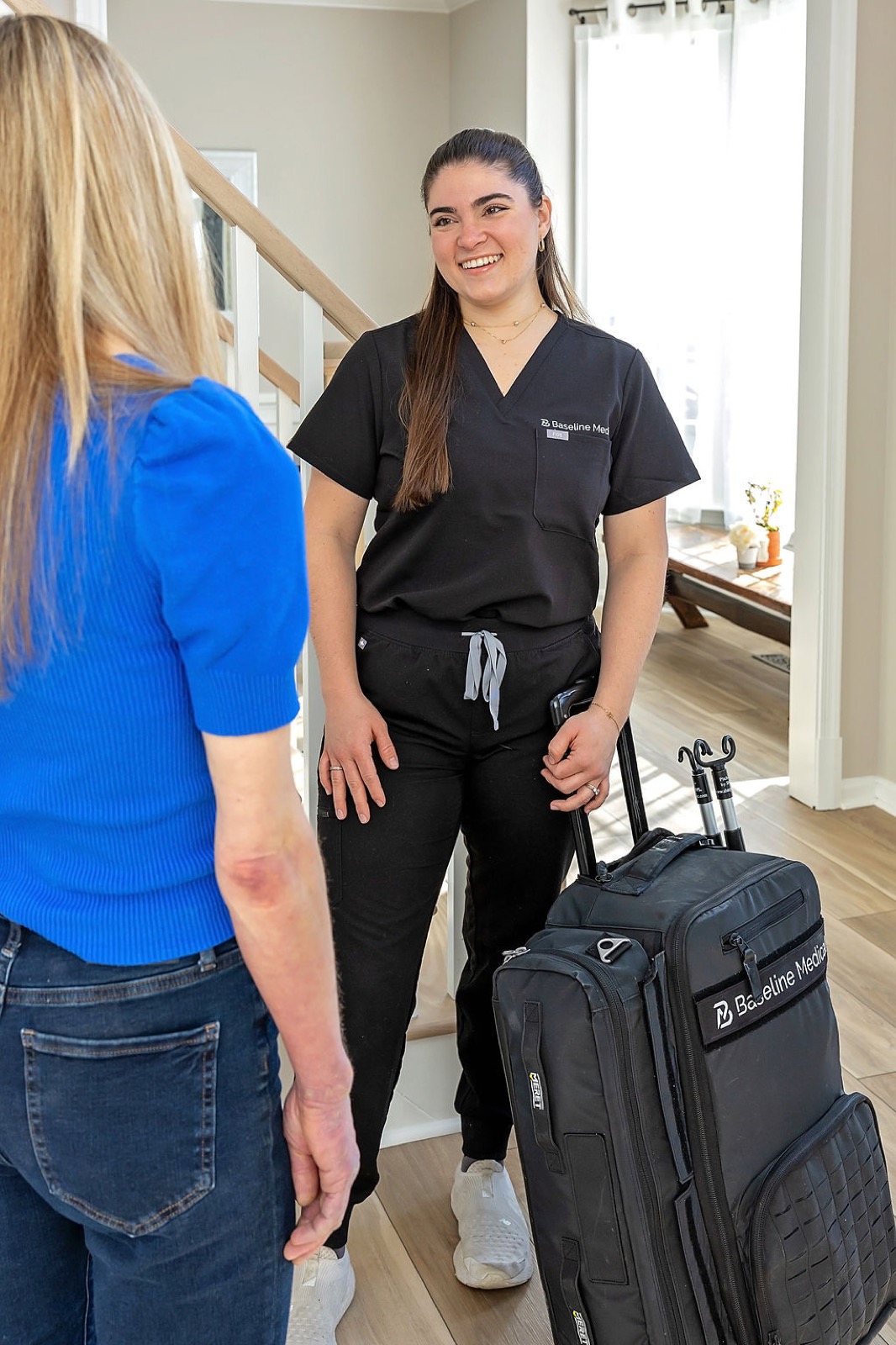
Baseline uses an on-site RN visit with Nurse Practitioner guidance.
A Baseline Medical Registered Nurse performs the on-site assessment and care execution. A Baseline Medical Nurse Practitioner guides wellness appropriateness, protocol decisions, symptom review, and escalation.
Escalation guidance
Recovery symptoms should still be screened for warning signs.
Baseline Wellness Care is designed for selected lower-acuity recovery situations. Severe or unstable symptoms require urgent or emergency evaluation.1
- Chest pain
- Trouble breathing
- Confusion
- Fainting
- Rapidly worsening symptoms
- Severe weakness
- Unable to tolerate fluids
- Signs of a more serious underlying illness
Baseline method
A repeatable recovery-support visit sequence
Step 01
Recovery review
Understand what is slowing recovery and how symptoms are affecting daily function.
Step 02
Risk screening
Review warning signs, instability, dehydration context, and unresolved illness concerns.
Step 03
Wellness decision
Determine whether home recovery, Baseline Wellness Care, or higher-acuity evaluation is safest.
Step 04
Support when appropriate
Provide wellness support or hydration support within protocol when appropriate.
Step 05
Close safely
Give recovery guidance, follow-up recommendations, and escalation triggers.
Common questions about recovery support
What does recovery support mean?
Recovery support focuses on helping people who are no longer acutely ill but still feel depleted, fatigued, dehydrated, low on energy, or slower to recover than expected.
When can Baseline Wellness Care help with recovery?
Baseline Wellness Care may be appropriate when fatigue, hydration overlap, travel strain, stress, burnout, or delayed recovery is lingering and the person is stable overall without emergency warning signs.
Does recovery support always include IV therapy or vitamins?
No. Wellness support is individualized. Hydration support or wellness therapies may fit selected stable cases when clinically appropriate, but care always begins with evaluation first.
When should someone seek urgent or emergency care instead?
Urgent or emergency care is required for chest pain, trouble breathing, confusion, fainting, severe weakness, rapidly worsening symptoms, inability to tolerate fluids, or signs of a more serious condition.
How does Baseline decide what support fits?
A Baseline Medical Registered Nurse performs the on-site assessment and care execution. A Baseline Medical Nurse Practitioner guides wellness appropriateness, protocol decisions, symptom review, and escalation.
This page is for informational purposes only and does not provide emergency guidance or medical advice.